 Paul Hanaoka @Unsplash
How much does an eSIM cost? Your guide to affordable connectivity

Jarrod Suda
Guide
Byron Mühlberg
Reviewer

As a frequent traveler, I’ve tested countless SIM cards and eSIMs sold at airports, convenience stores, and online shops. I’ve also made my fare share of mistakes getting hit with unexpected roaming charges.
How much does a travel eSIM cost and how do you find the best deal? In this guide, I’ll break down eSIM prices, share insights from my own experiences, and show you how our eSIM comparison engine can save you time and money.
Let’s dive in.
Find the best travel eSIM plan in a few clicks:
Everything you need to know about eSIM pricing
What is an eSIM and why use it for travel?
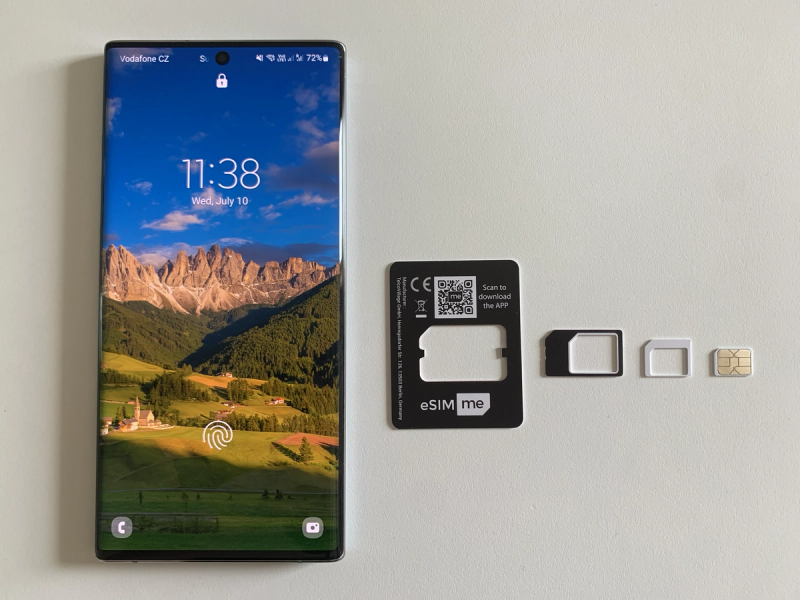
An eSIM is a digital SIM embedded in your phone, letting you connect to local networks without swapping physical cards. If you have an eSIM-compatible phone, you can ask your domestic network provider to send you an eSIM to download on your smartphone.
They are also game-changers for travelers. You download a plan, scan a QR code or install it directly, and you’re online in minutes — no fumbling with tiny SIM trays or risking roaming fees. I’ve used eSIMs in over 20 countries, from Japan’s big cities to remote Greek islands, and they’ve never let me down. Benefits include instant activation, cost savings compared to traditional roaming (which can cost $10-$15 per MB!), and the flexibility to instantly switch plans on the go.
Understanding eSIM costs
Knowing eSIM costs upfront helps you budget smarter. A week-long trip will cost you an average of $4 for a basic 1 GB plan or $60 for unlimited data, depending on your needs. I once bought a 10 GB plan for a 2-week trip to France, only to use 3 GB — lesson learned. In another case, I was remote working in the Netherlands for a month without much wifi. I should have purchased an unlimited data plan, but bought a 20GB plan instead (and had to top-up the plan).
Factors affecting eSIM costs
By understanding what drives eSIM prices, you can pick a plan that fits your itinerary and wallet. They vary based on a few key factors:
Data allowance
The amount of data you get is the biggest price driver. Small plans (1-5 GB) are perfect for light users who check emails and maps, costing $4-$15. Larger or unlimited plans, ideal for streaming or video calls, range from $19-$60. For example, Airalo offers 1 GB for $4.50 in many countries, while Holafly’s unlimited plans start at around $20 for 5 days.
For example, I usually stick to 3 GB for a week-long trip, but if you’re a heavy user, 5 GB to 10 GB plans like Holafly’s are worth the splurge.
Plan duration
How long your plan lasts also affects the cost. Jetpac, for instance, has a 4-day 1 GB plan for just $4, perfect for weekend getaways.
Longer plans often offer better value per day. Jetpac has a 30-day 40 GB plan for $39, which comes out to under $1 per GB.
In comparison, Holly’s 30-day unlimited data plan costs just under $75, which comes out to $2.50 per day. While this is more expensive, you do have the added benefit of hot spotting up to 1 GB per day to a friend or family member. For family travel, unlimited data plans can be a great option.
Provider features
Some providers throw in extras that justify higher prices. Jetpac’s SmartDelay offers free lounge access if your flight’s delayed. Saily includes NordVPN-backed security, great for public Wi-Fi. GigSky offers data plans for cruises and flights. Others, like Yesim, let you pause plans, saving data for later.
Destination and coverage
Most of the time, you’ll buy local plans covering one country, which are the cheapest. If you’re going on a multi-country trip, regional plans (e.g., Europe or Asia) cost more, while global plans, covering 100+ countries, cost the most.
eSIM4Travel offers 1 GB for under $4 in some countries like Thailand, Japan, and the USA, but prices climb for pricier destinations like the Canada, Germany, and Mexico.
Always check with simsurf’s eSIM comparison engine to compare prices and find the best deal for your trip:
Find the best travel eSIM plan in a few clicks:
Average eSIM prices this year
Let’s get to the numbers. Here’s what you can expect to pay for eSIMs in 2025, based on my research and personal use:
Price ranges by plan type
- Local Plans: $4-$15 for 3-5 GB.
- Regional Plans: $6-$20 for 3-5 GB.
- Global Plans: $19-$28 for 10 GB.
Cost per GB rates
Here’s what you can expect for dollar per Gb rates. Generally, the rate is more favourable the larger the plan:
- 3 GB plans: $1.30 to $3.30 per GB
- 5 GB plans: $1.15 to $2.90 per GB
- 10 GB plans: $0.90 to $1.30 per GB
- 20 GB plans: $0.80 to $1.25 per GB
- Unlimited plans: Unlimited plans make per-GB costs irrelevant. However, you can expect to pay $7+ per day for 1-day unlimited plans and $1.50+ for 90-day unlimited plans.
How to find the best eSIM deal
With so many options, picking the right eSIM can feel overwhelming. Our eSIM comparison engine is your shortcut to the best deal.
Filter by country, data, duration, and price, read customer reviews, and unlock exclusive discounts. I’ve used it to save 20% on plans for Europe and the United States.
Stop guessing — let our tool do the heavy lifting: