eSIM vs physical SIM: Are eSIMs really that much better?

Jarrod Suda
Guide
Byron Mühlberg
Reviewer

Whether you’re buying a new phone or planning a trip abroad, you’ll need to decide: eSIM or physical SIM?
I'll walk you through my experience with both, share what I’ve learned, and show you why I lean toward eSIMs — especially for travel. Plus, check out Simsurf’s eSIM comparison engine to help you find the best plan in seconds.
Find the best travel eSIM plan in a few clicks:
What’s the difference between an eSIM and a physical SIM card?
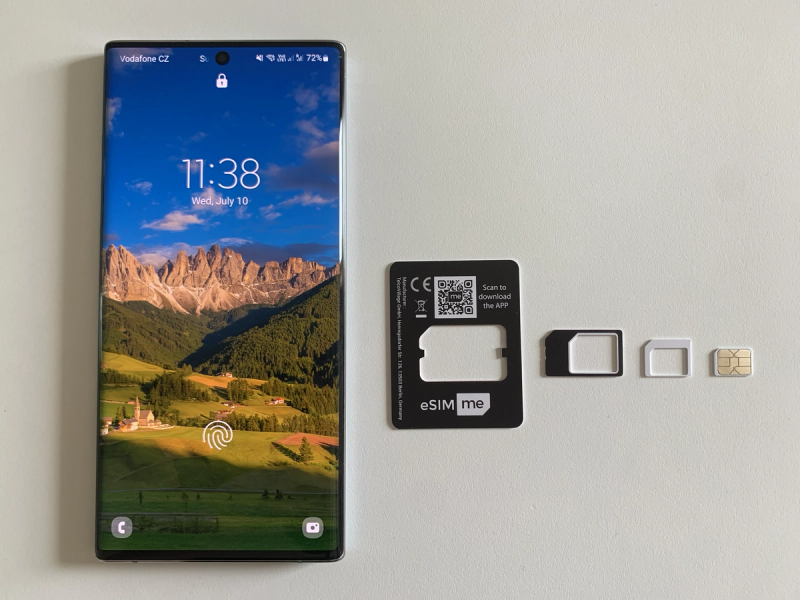
Just a few years ago, physical SIM cards were the only option available. These little plastic chips slide into your phone’s tray, acting like a key to connect you to a carrier like AT&T or Verizon. They’re very straightforward, but also easy to lose if you’re swapping them out.
An eSIM is a digital chip in your phone. Instead of popping in a physical card, you can just scan a QR code or use an app to download an eSIM for your network carrier. This allows you to switch networks without touching a SIM tray.
eSIM pros and cons

Now that you know what eSIMs and physical SIMs are, let’s take a look at th advantages and drawbacks of eSIMs to see why they’re becoming so popular.
eSIM pros:
- Switching carriers is easy: Activate new plans in minutes using a QR code or app—no store visits required.
- Perfect for testing networks: I love trying free trials from different carriers without swapping cards to find the best signal.
- Best for travel: On trips, install international eSIMs before landing. No hunting for local SIMs or risking losing my home SIM.
- Secure and built-in: Since it’s part of the phone, don’t worry about losing or damaging it.
- Store multiple profiles: Keep several carrier plans on your phone and switch between them instantly.
eSIM cons:
- Setup can be tricky: First-time users might find downloading profiles or scanning QR codes confusing.
- Not every phone supports it: Older or budget models often lack eSIM, which limits options when testing.
Physical SIM pros and cons
 Brett Jordan @Unsplash
Physical SIMs still have their place. Here’s why you might still want to use one for your phone:
Physical SIM pros:
- Swapping is straightforward: If you have multiple SIM cards, simply take one out and put another in.
- Works almost everywhere: Almost every phone, especially older or budget ones, supports physical SIMs.
Physical SIM cons:
- Easy to lose: I've misplaced tiny SIMs during swaps, and it’s a hassle to replace them.
- Inconvenient switching: Getting a new SIM usually means a trip to a store or waiting for delivery — not ideal when traveling or in a rush.
- One network at a time: Unlike eSIMs, physical SIMs lock you into a single carrier until you swap again.
Phones that support eSIMs
eSIM support started popping up in mainstream phones around 2020. We've cataloged every eSIM-compatible phone on this list 👈
- Apple: iPhone SE and newer. Models like the iPhone 14 and 15 are eSIM-only in some regions.
- Samsung: Galaxy S20 series and up, plus Z Fold and Z Flip lines.
- Google: Pixel 4 and newer.
- Others: Sony, Oppo, Motorola, Xiaomi, and more offer eSIM, but it varies by model.
Some newer phones, like the latest iPhones, ditch physical SIM slots entirely. Others support both, which I find handy for testing.

Note: If you’re buying a phone, check the specs — some models, especially from China, do not support eSIMs.
Is an eSIM or a physical SIM better for travel?
 Madi Morales
As a frequent traveler, I can’t overstate how eSIMs have simplified my trips. Instead of landing and scrambling for a local SIM at an airport kiosk, I buy an eSIM plan before I fly. I scan a QR code, and I’m online in minutes — no language barriers or lost SIMs to worry about.
Apps like Airalo and Holafly make it even easier to top up data or manage plans on the go. Top up instantly through the apps. Many eSIM providers support features like VPNs, hotspots, and 5G, plus coverage across multiple networks for reliability in both cities and rural areas.
Physical SIMs tend to be a hassle abroad. Swapping cards risks losing your home SIM, and finding a store in a new country isn’t always easy.
To find the best deal, use Simsurf’s eSIM comparison engine, which compares plans for over 200 countries, factoring in data size, trip length, and price. We often offers discount codes to save you money, ensuring you get the cheapest and most reliable plan for your adventure 👇
Find the best travel eSIM plan in a few clicks:
Do eSIMs or physical SIMs have stronger connectivity?
In my tests, eSIMs and physical SIMs deliver identical connectivity. Both use the same 4G/5G networks, so signal strength depends on the carrier’s coverage, not the SIM type.
Where eSIMs shine is flexibility — I can store multiple profiles and switch networks instantly without swapping cards. Physical SIMs require manual swaps.
Should I use an eSIM or a physical SIM?
The choice between eSIM and physical SIM depends on your needs, but I am team eSIMs for most cases.
Major U.S. carriers like AT&T, Verizon, and T-Mobile all support eSIM for domestic phone plans. For international travel, eSIMs are unmatched for convenience.
The main advantage of a physical SIM is that it can stay active as your long-term primary plan while you experiment with eSIMs for short-term needs, like free carrier trials or international travel plans. After you've done your tests, feel free to make the switch to eSIM.
Simsurf’s eSIM comparison engine is a great tool to find the best travel eSIM plan, comparing options across 200+ countries for the cheapest and most reliable data 👇
Find the Best eSIM Plans Available in Over 200 Countries:
Check out our related guides: