CHUTTERSNAP @Unsplash
How to Get a SIM Card at Lima Airport Quickly & Affordably

Byron Mühlberg
Guide
Are you heading to Lima soon and are already dreaming of experiencing its dramatic Andean landscapes and world-class hiking trails? Then you're not alone. Every year, over two million visitors arrive in the city to get acquainted with its uniqueness for themselves.
To make your travels more comfortable, you'll probably want to buy a local SIM card as soon as possible after you arrive. If you're flying into Lima Airport, you shouldn't have any difficulty getting a SIM card over the counter after you've landed and collected your baggage. However, there’s an even easier solution you should consider to save yourself time and hassle. We'll explore all this in our short how-to guide below.
How to Get a SIM Card in Lima Airport
Finding a SIM Card at Lima Airport
 Mike Mozart (CC BY 2.0, unmodified)
Jorge Chávez International Airport is a huge international airport that handles millions of people and thousands of flights each year, both domestically and internationally. This can mean two opposing things for you: (1) you can find everything you as a traveler could ever want or need upon arriving in Peru (not just car rentals, local treats, taxis, and currency exchange, but also SIM cards). But at the same time, it also means (2) you might have trouble finding a mobile service store within the giant airport complex.
Here's where you should look:
After landing at Lima Airport and collecting your baggage, you'll be free to leave the departures-and-arrivals zone of the airport, where there are fewer retail stores. Once you're in the main terminal building (all arrival zones at Lima Airport lead there directly, albeit sometimes with airport transport depending on your arrival gate), look around for a SIM card or mobile services shop or kiosk, or even just a general convenience store. These will be advertised in English and clustered in the shopping area before you reach the exit.
Your two main options in Lima Airport are:
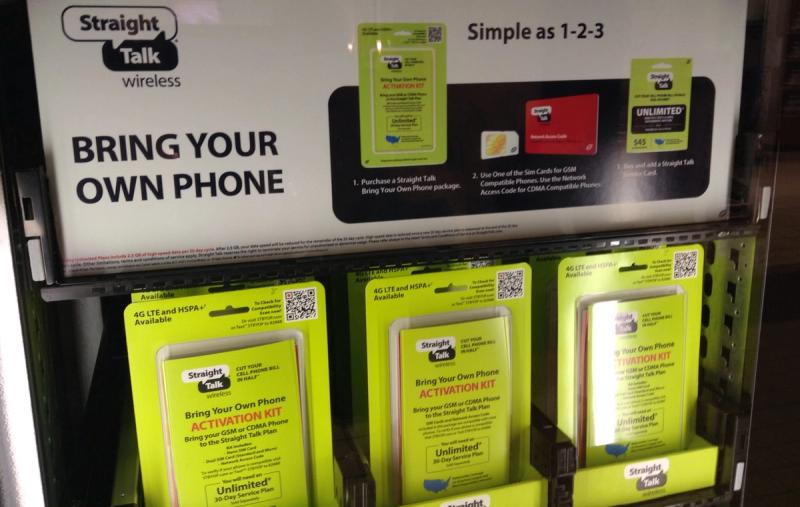
- Mobile Service Stores: Major mobile carriers in Peru like Movistar and Claro Peru have kiosks in the Lima Airport main terminal building outside the arrivals or baggage claim area. Here, you can buy prepaid SIM cards of varied data volume, normally valid for one month.
- Convenience Stores: If you don't have any luck finding a mobile service store, convenience stores are a good second bet. Some convenience stores or travel shops within Lima Airport also stock SIM cards for immediate purchase. If not, you could at the very least ask the cashier where to find the nearest store that will.
It's not all too complicated. It might take a little longer than otherwise, but you should be able to find and purchase a local Peruvian SIM card and some prepaid data without too much trouble and be on your way. Luckily, there are also lots of information kiosks in the airport where you can ask for help.
While purchasing a SIM card at the airport is usually convenient enough, it's also worth remembering that you might encounter long lines or higher prices due to the airport setting. For example, stopping by one of these stores before catching your taxi onwards can easily add another 30 minutes or one hour to your arrival time in the city. What's more, in some cases, airport-bought SIM cards may come with added fees for international travelers (although this isn't the norm in Peru, where you can generally expect to get the same per-gig rates as the locals).
Consider Using an eSIM
Instead of waiting in line or dealing with the hassle of buying a physical SIM card over the counter, you can use an eSIM instead.
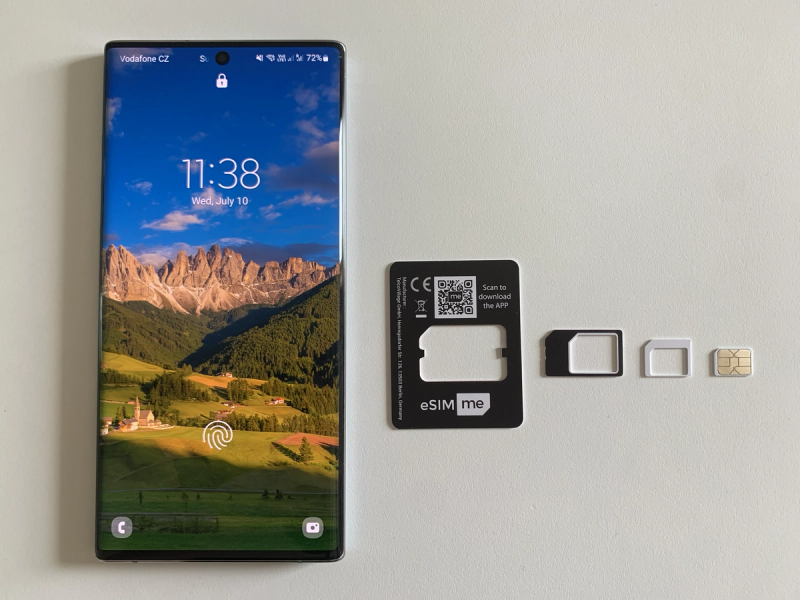
Simply put, eSIMs are regular SIM cards that don't require you to insert an actual microchip into your device while providing the same benefits. Most newer smartphones can be equipped with eSIMs, and since you don't need a physical card, you can purchase and download your eSIM from the comfort of your home before even leaving for Lima! To do this, all you have to do is visit an online eSIM service's website, purchase the eSIM you want, and follow the instructions to download and install it onto your device.
If you use iOS, take a look at our video tutorial below. Here, we explain how eSIMs work and how to install one on your iPhone:
In summary, there are a number of key advantages to using an eSIM over a physical SIM for your trip to Peru:
- internet immediately upon arrival in Lima,
- no dealing with SIM card retailers at the airport,
- upfront and fair pricing,
- in-app top-up is available on the go,
- credit card payments are possible,
- connection via local Peruvian networks.
However, eSIMs aren't suitable for all travelers. For one, per-gigabyte data is normally slightly more expensive than prepaid physical SIM cards. So if you're watching every penny, we recommend buying a SIM card over the counter when you arrive at Lima Airport. However, they do save you some hassle, so we think eSIMs are worth the extra cost for most people.
Another disadvantage is that eSIMs aren't available on all phones. Most phones (as well as tablets and smartwatches) manufactured from 2020 onwards should be eSIM-compatible, but older models generally are not. You can check this list of eSIM-compatible devices to be sure.
Which eSIM Should I Get?
If you're interested in going the eSIM route, there are a lot of excellent providers out there. These include Airalo, GigSky, Jetpac, Holafly, FlexiRoam, and others. Here are Simsurf, we've analyzed, tested, and compared all of these services and more to give you recommendations on which eSIM to purchase for your specific needs.
So, what would we recommend?
Well, if you're just looking for a regular amount of data for everyday use for your trip to Peru, we recommend Airalo. Airalo is a market-leading eSIM provider that allows you to purchase your SIM card online before your trip and activate it as soon as you touch down in Lima. Like all eSIMs, the entire process with Airalo is digital, eliminating the need for physical SIM cards or offline purchases altogether.
In Peru, Airalo's rates range from $6 to $20 and include between 1 GB and 5 GB of data, which are pretty cost-effective, and among the best you can get when buying Peruvian mobile data.
On the other hand, it you want unlimited data, then we recommend Holafly. This service works in pretty much exactly the same way as Airalo: you purchase your eSIM in advance of your trip, install it, then activate it when you arrive in Peru. The only difference is your data is unlimited.
Because it gives you unlimited data, Holafly's upfront rates are higher than Airalo's. In Peru, Holafly's data packages cost between $27 and $79 once off and are valid from five to 30 days.
If you're unsure, you can compare Airalo to Holafly by taking a look at our side-by-side review of these two market-leading providers.
However, it's also worth remembering that neither Airalo nor Holafly is guaranteed to offer the cheapest eSIM plans for your specific trip length and data needs in Peru. That's why we recommend comparing providers on our real time comparison portal. Find the best deal for your trip in just a few clicks! 👇
Compare all 13 eSIM data plans for Peru in just a few clicks:
FAQ About SIM Cards in Peru
See these guides too: